|
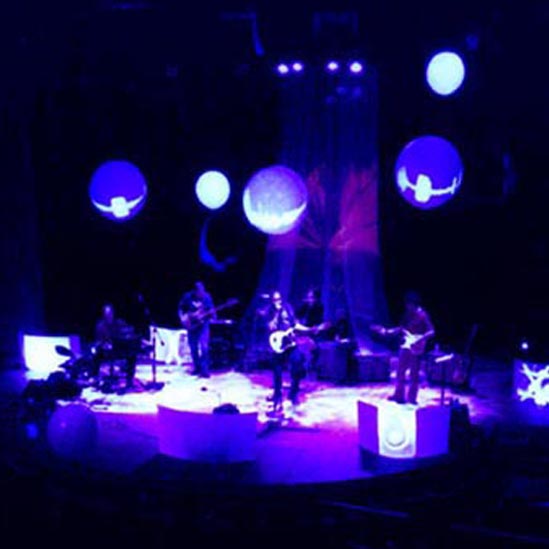
SCENIC Band
History
When SAVAGE REPUBLIC founding member Bruce Licher relocated from
his native Los Angeles to Arizona in late 1992 he decided it was
time to form a new band. He also had the perfect name for the all-instrumental
musical ideas hed been conceptualizing since the dissolution
of his previous group in 1989. SCENICs first rehearsal in
November of 1992 consisted of Licher on guitar, former SHIVA BURLESQUE
bassist James Brenner,
and drummer Brock Wirtz, the three of whom carved out minimalist
soundscapes which formed the basis for what would become SCENICs
debut album, Incident At Cima. Conceived as an evocative soundtrack
for the East Mojave Desert, the group explored various instrumental
themes using a sound pallette consisting of traditional and non-traditional
instruments including Lichers unison-tuned monotone
guitar, producing a
unique sound which he had been developing during his years in SAVAGE
REPUBLIC. Joined in the studio by former SAVAGE REPUBLIC and 17
PYGMIES member Robert Loveless on keyboards, along with several
friends as guest musicians, SCENIC captured the stark beauty of
the East Mojave in a sound described by Rolling Stone scribe David
Fricke as Ennio Morricone dune-surfing in Death Valley.
Packaged in an elaborate
letterpress-printed cardboard CD package, the artwork for Incident
At Cima featured panoramic photos Licher had taken of the landscapes
described musically by the songs. This first album was released
on CD by Lichers Independent Project Records (IPR) in early
1995, and was later licensed for release in Germany and the U.K.,
along with a vinyl edition created and co-released by IPR and the
Greek label Hitch-Hyke Records.
With the release of Incident At Cima, the group expanded to a five-piece
for live performances, with Loveless becoming a permanent member,
and guitarist Brandon Capps from the Arizona-based group HALF STRING
joining on rhythm guitar. SCENIC began to perform in California
and Arizona, securing support slots with groups such as STEREOLAB
and PELL MELL, as well as contributing to several Beautiful Noise
music festivals
organized by Capps in Phoenix and Tucson. A single with two non-album
tracks called Sage was released by IPR at the beginning of 1996
on both CD and vinyl, and showed a nice progression of SCENICs
sound, with a more layered, melodic feel. At this time SCENIC signed
a two-album contract with World Domination Recordings and began
working on the material for what would become their second album.
Due to increased
activity with his own band, Capps left the group and was replaced
by guitarist Doug Smith, though both contributed to the recording
of Acquatica, SCENICs second album. Released by World Domination
Recordings in late 1996, this album showed SCENIC taking on a denser,
more progressive sound, with more group input into the
writing of the material. Additional musicians were again invited
to contribute, with horns and the
mellotron-like chamberlin joining the usual (and unusual) sounds,
and more new guitar sounds and effects were incorporated into the
blend. Acquatica took on the feel of a travelogue to some strange,
exotic land, and included several 8-9 minute epics. Critical reaction
was generally good, though one punk rock zine who didnt
much care for the album managed to coin an interesting new genre
of music for SCENIC: aggro new
age. By the time the album was complete, Doug Smith had left
the group, and guitarist Mark Mastopietro had joined, and SCENIC
began an increase in the number of performances to promote the new
album. Upon the release of Acquatica, SCENIC undertook a short West
Coast tour with LANTERNA, an instrumental group led by llinois-based
musician Henry Frayne. A live EP was co-released by IPR and Parasol
Records on CD and vinyl documenting this tour, with two tracks from
each group, again in hand-letterpress printed packaging. With the
support of World Domination, SCENIC was able to perform at festivals
in New York and Portland, as well as a successful and packed showcase
at SXSW in Austin, Texas in the Spring of 1997.
During 1997 much new material was being developed, with the group
branching out in several different directions. Upon the suggestion
of a small label who was preparing a series of bliss-out
music, SCENIC decided to try their hand at creating ambient
space rock as a side project and as a way to stretch out and
expand their improvisational skills. Expecting to be able to start
work on a follow-up to Acquatica in late 1997, a series of demos
of more melodic material were recorded during the Summer while simultaneously
working up the space rock material. As time went on
it became clear that World Domination was in financial trouble and
the group realized that it might need to finance the recording of
their third album themselves. With the dissolution of World Domination
at the end of 1998, it was decided to focus on the space rock
material for the next project, and recording began in early 1999
on what would become The Acid Gospel Experience. SCENIC had always
been a long-distance group, with Licher (and Capps) living in Arizona
and the others in Los Angeles, and so work continued on the new
recordings as the members schedules would permit. An EP of
demo recordings of the new material was co-released in late 2000
by IPR and Foundry Recordings in the UK, as a preview for the new
album. After a benefit performance for an anti-nuclear group in
Las Vegas, Nevada in November of 2000, SCENIC decided to take a
break from live performances in order to complete the new album
and arrange for its release.
The Acid Gospel Experience first saw the light of day in late 2002
as a bonus disc given away with the graphic design magazine Emigre.
Released with an alternate tracklisting, with several earlier demo
recordings taking the place of two of the final studio versions,
this album was sent out to 24,000 subscribers, introducing SCENICs
music to thousands of new listeners. At the beginning of 2003 The
Acid Gospel Experience was officially released in the USA on Hidden
Agenda Records and in the UK by Tenor Vossa
Records. Spanning almost 73 minutes, and including the 18 1/2-minute
improvisation A Journey Through The Outer Reaches of Inner Space,
this album saw SCENIC stretching their bourdaries in new ways, and
incorporating new instruments such as sitar, vibes, congas, and
other new guitar effects and sounds. It also included a guest piano
appearance on one track by minimalist elder statesman Harold Budd,
who had become a fan of SCENICs music over the years. With
the release of SCENICs third full-length effort, plans began
to start performing live again, and it also became necessary to
look for a new drummer. Kimber Lanning, former drummer with the
Arizona-based HALF STRING, has become the latest member of SCENIC,
and at the end of May 2003, several shows have been planned in Arizona
starting with an exclusive performance at
the Scottsdale Museum of Contemporary Art. As part of the southwestNET:
architecture & design exhibit, SCENIC will be performing at
the opening reception on Thursday, May 29th, and the exhibit will
include among other items a selection of Lichers graphic design
work for SCENIC and SAVAGE REPUBLIC. With this new beginning the
members of SCENIC are looking forward to continuing to develop the
melodic new material they had started working on previously, as
well as numerous other pieces that have been written over the last
several years.
|